Zeit Wishlist

A redesigned wishlist feature that enhances user engagement and boosts conversions through data-driven insights, intuitive design, and seamless integration into the shopping experience.

My roles
UX Research
UX/UI Design
Lead Role
Tools
  • Figma
  • Microsoft Clarity
Context & Team
  • Internship Project
  • 2 Developer
timeline
  • Nov 2024 - Feb 2025
    (4 Months)
overview

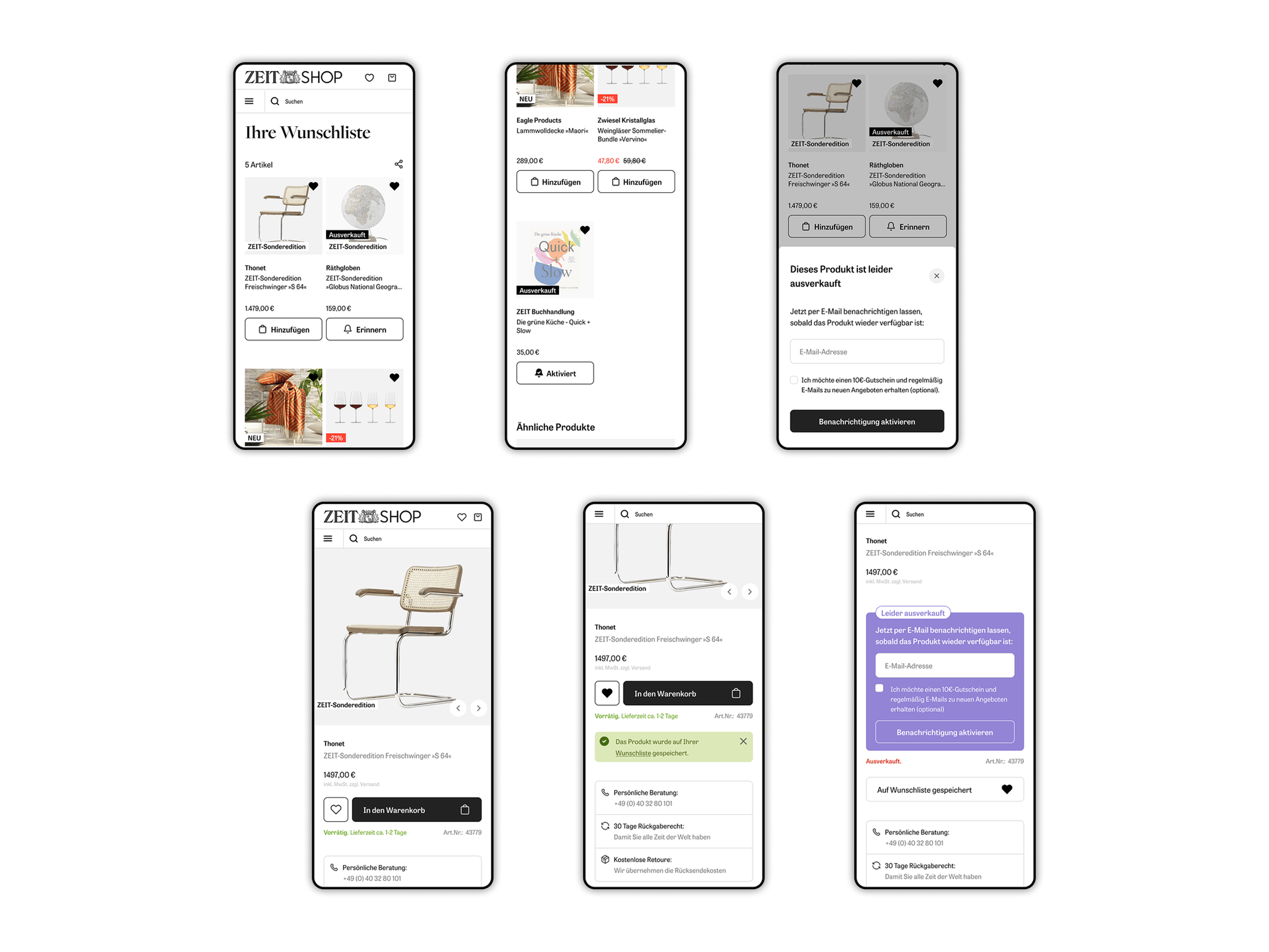
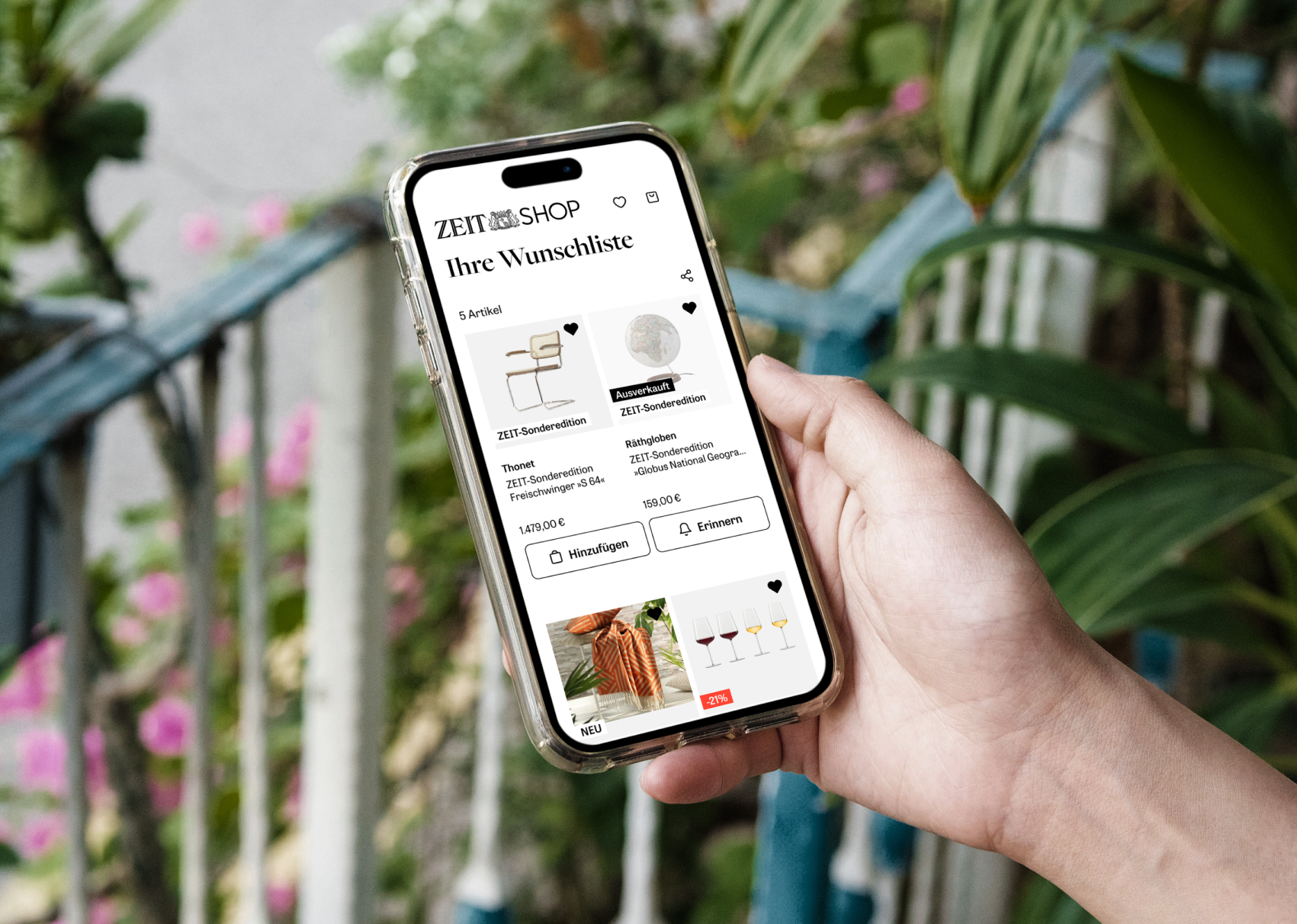
The ZEIT Shop wishlist project focused on redesigning an underdeveloped feature to better support user needs and increase conversion potential. Through data analysis, user behavior insights, and competitor research, I identified key improvements and developed a mobile-first solution with prioritized features. The result is a more intuitive and engaging wishlist experience that strengthens user retention and purchase likelihood.
My Contributions
  • Research: I conducted data-driven analysis, reviewed user behavior using Microsoft Clarity, and performed competitor research to identify opportunities and inform decisions.
  • UX Design: I designed the overall wishlist experience, including structure, layout, and user flows, with a strong focus on usability and conversion.
  • Interaction Design: I developed key interactions such as wishlist indicators, add/remove logic, and improved integration on product detail pages.
  • Prototyping: I created mid- and high-fidelity prototypes using a mobile-first approach and prepared the final designs for developer handoff.
The Problem
The ZEIT Shop wishlist was rarely used, despite showing a strong correlation with purchase likelihood. The experience had clear gaps: users couldn't tell whether a product was already saved when browsing, there were no availability updates, no price change notifications, and no clear path from the wishlist back to purchase. The feature had real conversion potential that simply wasn't being activated.

Solution

I redesigned the wishlist from the ground up, making it more visible, more actionable, and easier to act on.
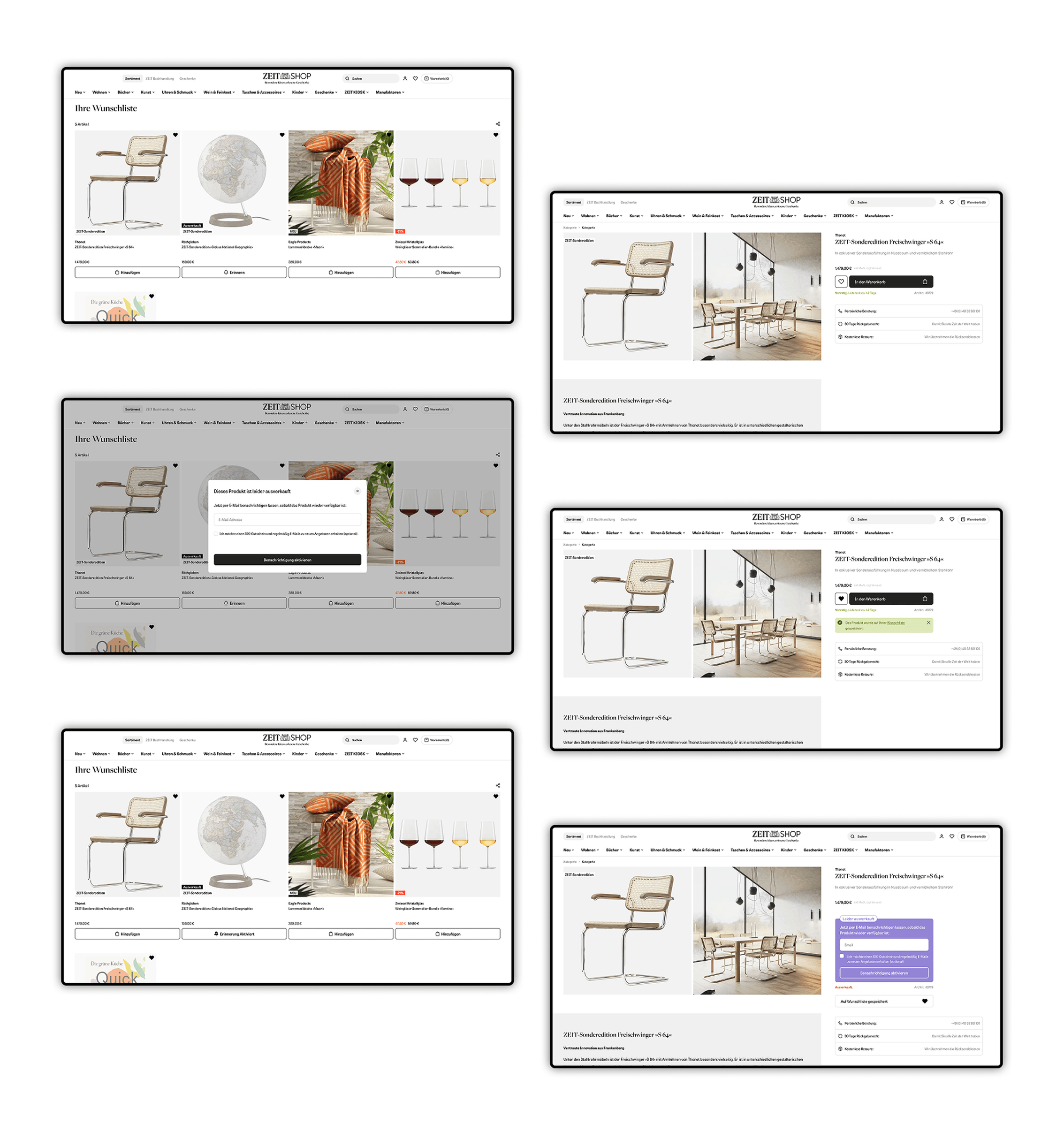
The redesign focused on three key changes: repositioning the wishlist button closer to the cart and making it reflect whether a product is already saved, adding availability indicators and price change notifications to create a reason to return, and streamlining the path from wishlist to purchase. Designs were developed mobile-first and handed off to development with full specs.

Reflection

This project taught me how to turn data into a design argument. Being able to point to real conversion metrics made it much easier to align stakeholders around the redesign — and it changed how I think about justifying design decisions. I also learned that a limited scope isn't a constraint, it's a choice. Focusing solely on registered users meant we could move faster and build something that actually fit the existing product. If I could do it again, I'd involve the development team earlier to stress-test feasibility before handoff.
VIEW PROJECT