Rehealth

A digital rehabilitation tool that bridges the gap between athletes and therapists through smart tracking, intuitive design, and seamless remote communication.

My Roles
  • UX Research
  • UX/UI Design
  • Product Design
Tools
  • Miro
  • Figma
  • Adobe Illustrator
Context & Team
  • Uni Project
  • 3 Designers
Timeline
  • Oct 2023 - Jan 2024
  • (4 Months)
overview

ReHealth is a professional remote rehabilitation tool designed to bridge the gap between patients and therapists through real-time tracking and intuitive design while revcovering from an injury. The system combines a wearable SmartBrace with AI-powered analytics to precisely monitor physical progress. By replacing fragmented sessions with a continuous data-driven connection, ReHealth enables personalized, adaptive therapy plans that support recovery from anywhere while reducing the administrative and diagnostic burden on therapists.

My Contributions
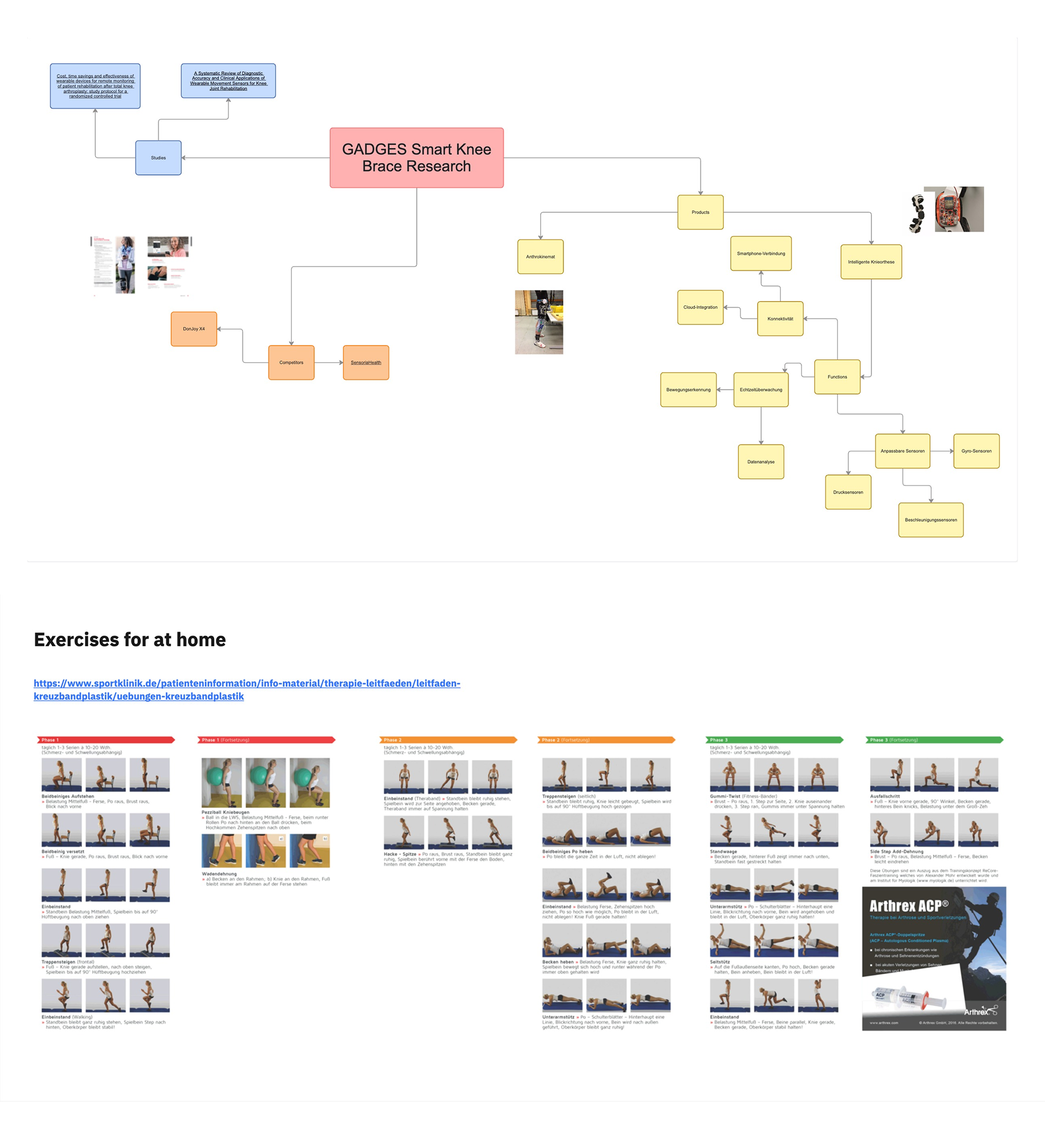
  • Research: I conducted competitive benchmarking and analyzed rehabilitation protocols for orthopedic injuries and smart wearable integration
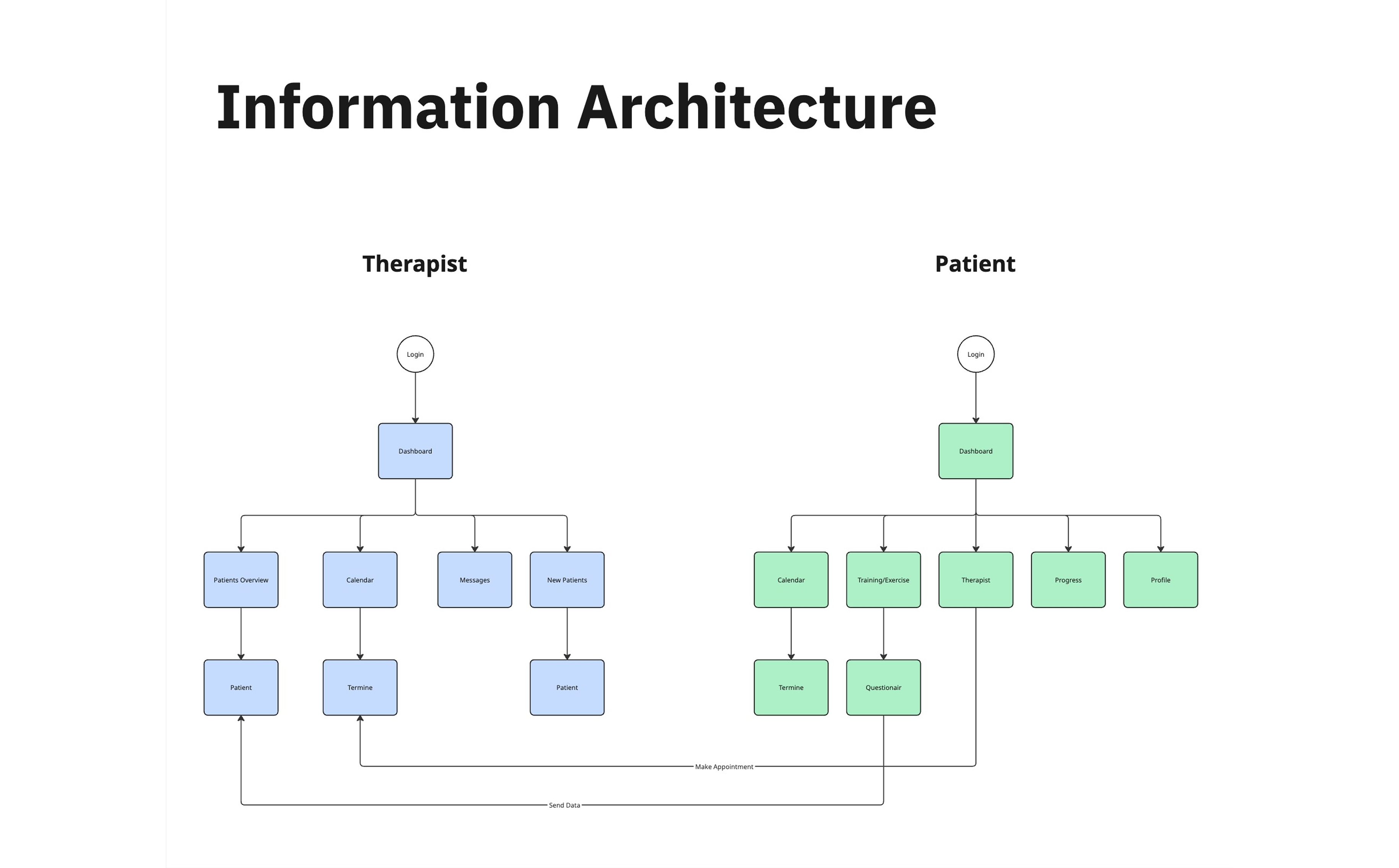
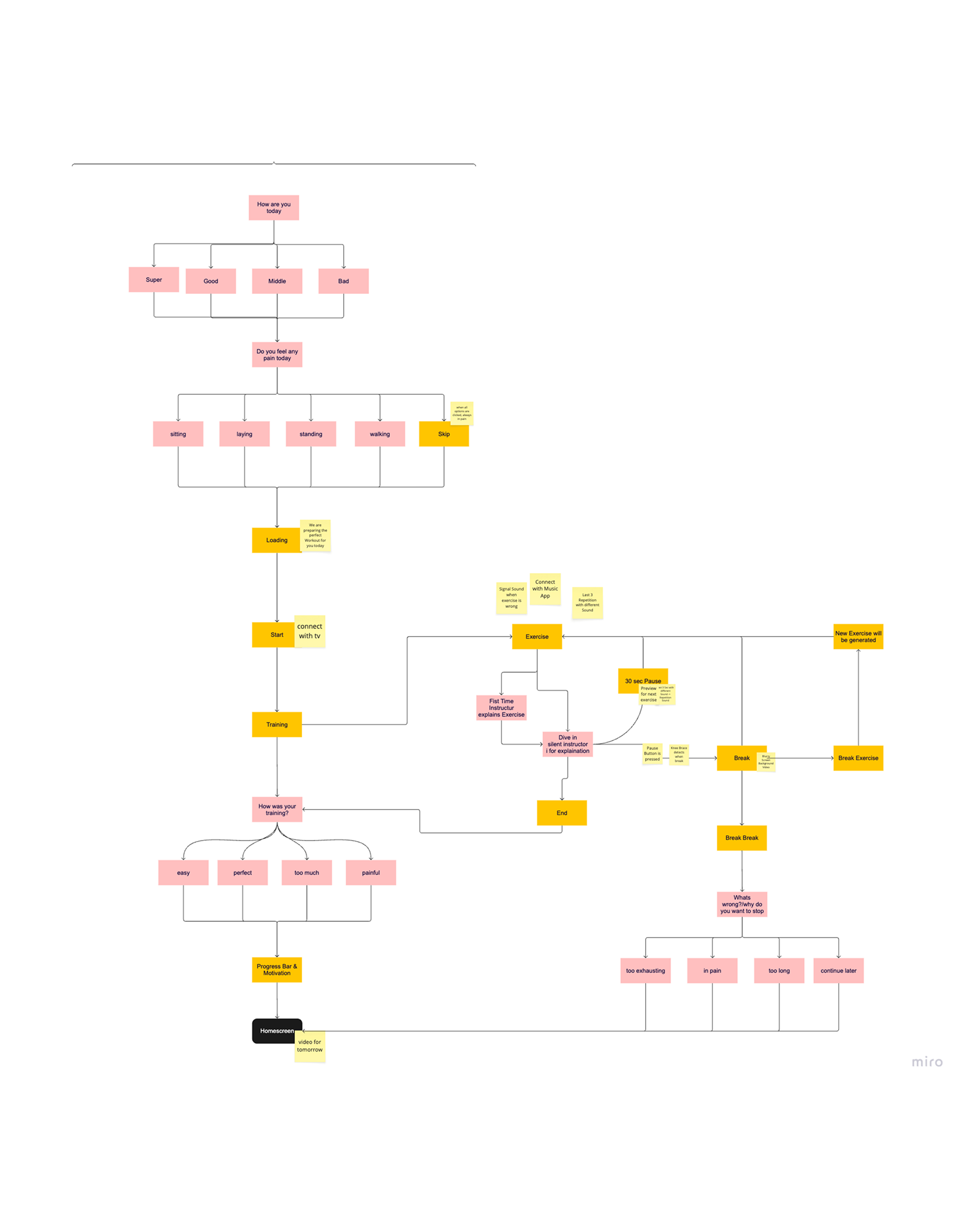
  • UX Strategy: I defined the information architecture and intuitive user flows to ensure seamless navigation between complex data sets.
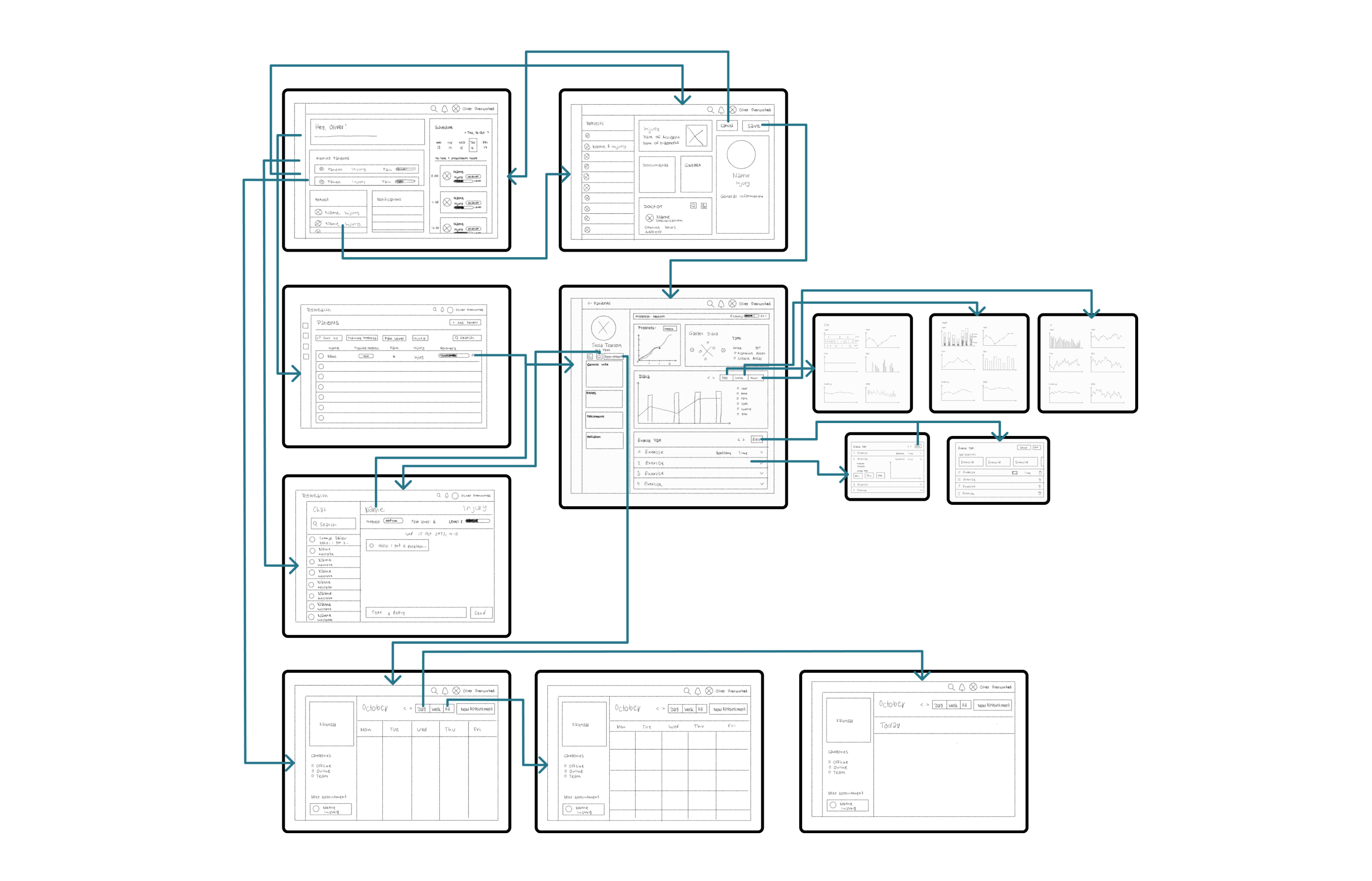
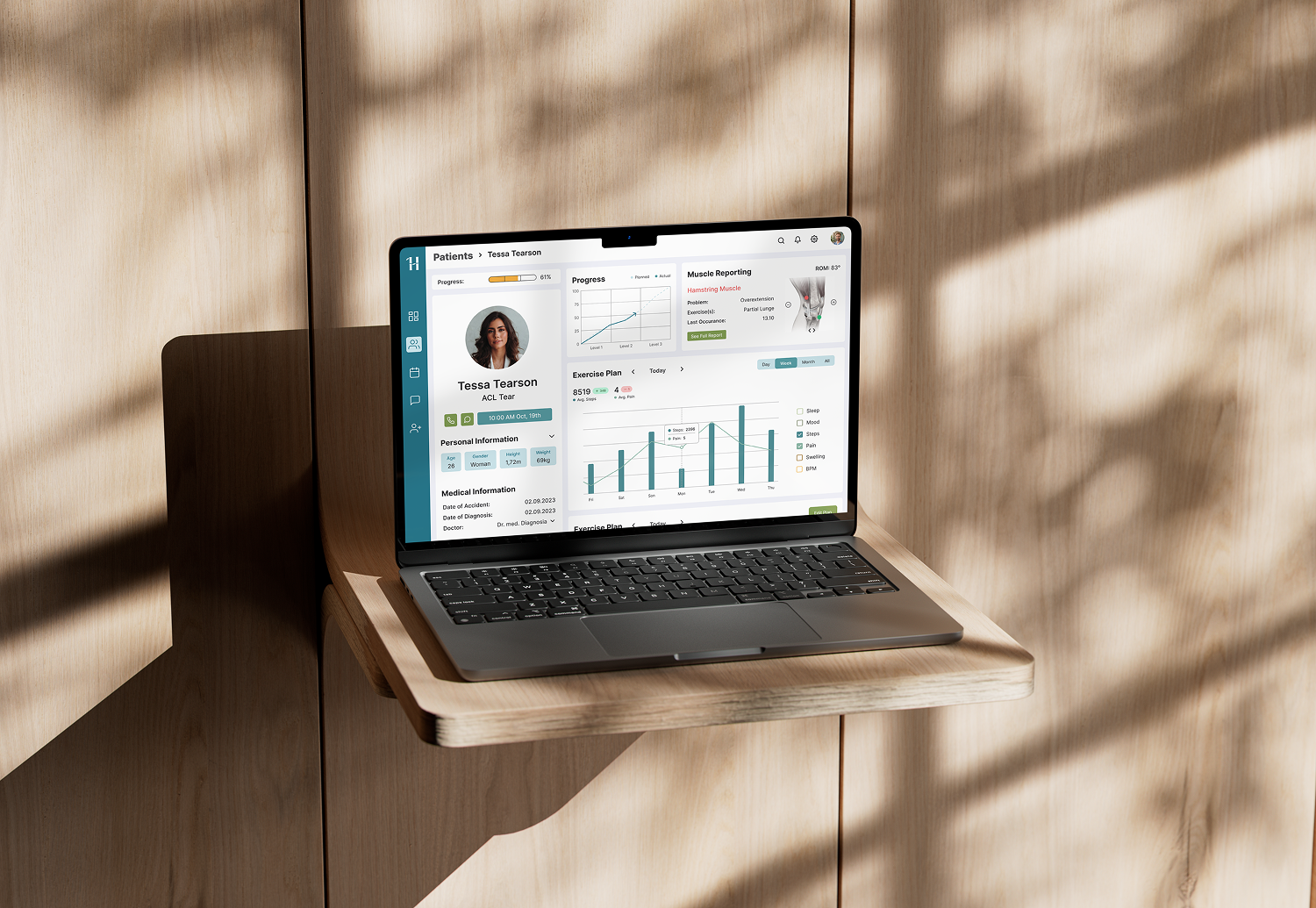
  • UX/UI Design: I designed the Therapist’s UI, focusing on data visualization and the backend logic for patient monitoring systems.
The Problem
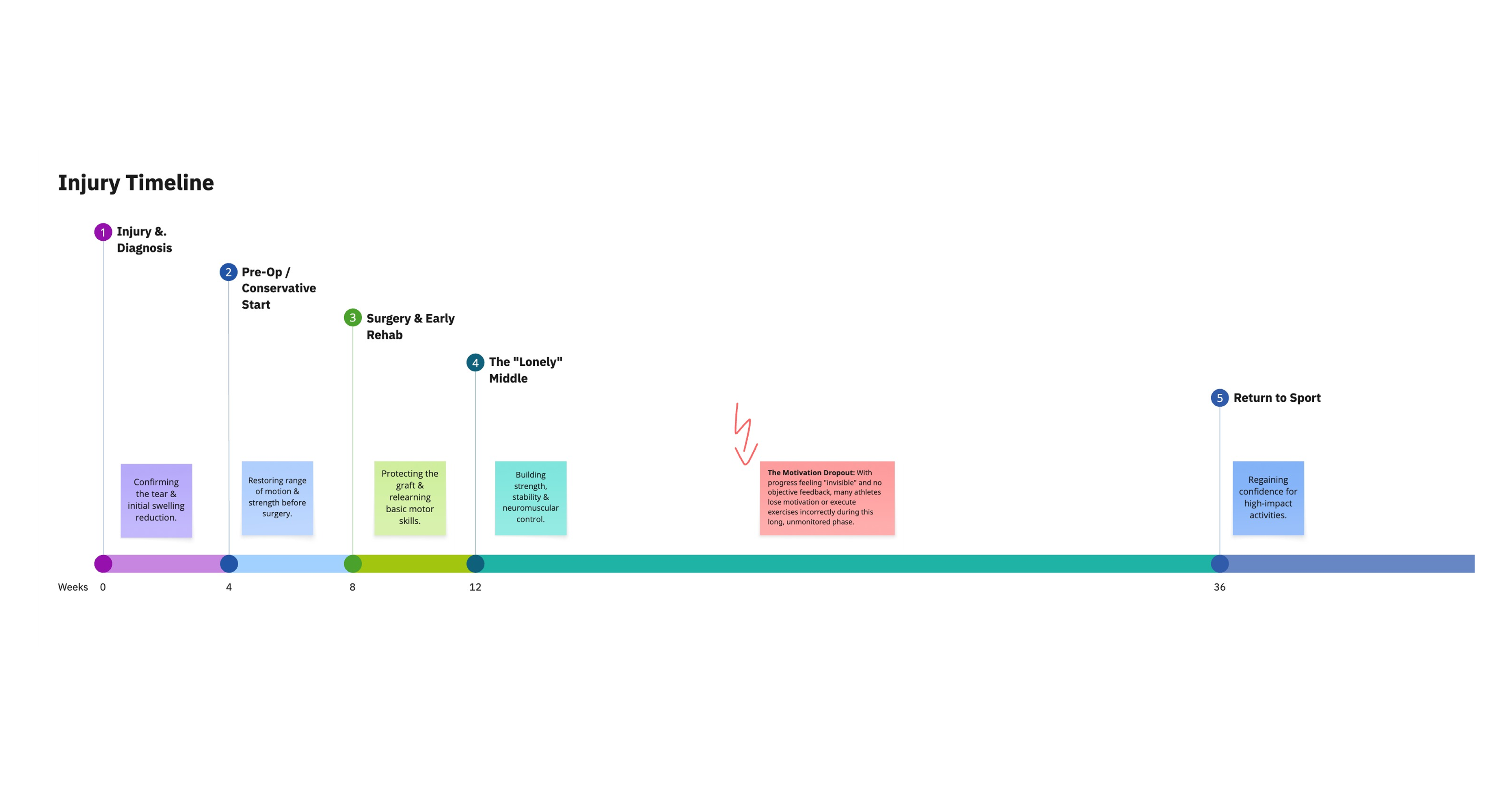
Traditional physical rehabilitation often hits a wall the moment a patient leaves the clinic. For athletes, the journey to recovery is frequently plagued by uncertainty; without professional guidance during home exercises, incorrect execution and a lack of feedback lead to a massive drop in motivation. On the other side of the spectrum, therapists face overwhelming patient volumes and back-to-back appointments. Without objective data from the patient’s time at home, every in-person session must begin with time-consuming manual assessments, wasting valuable treatment time on basic status checks.

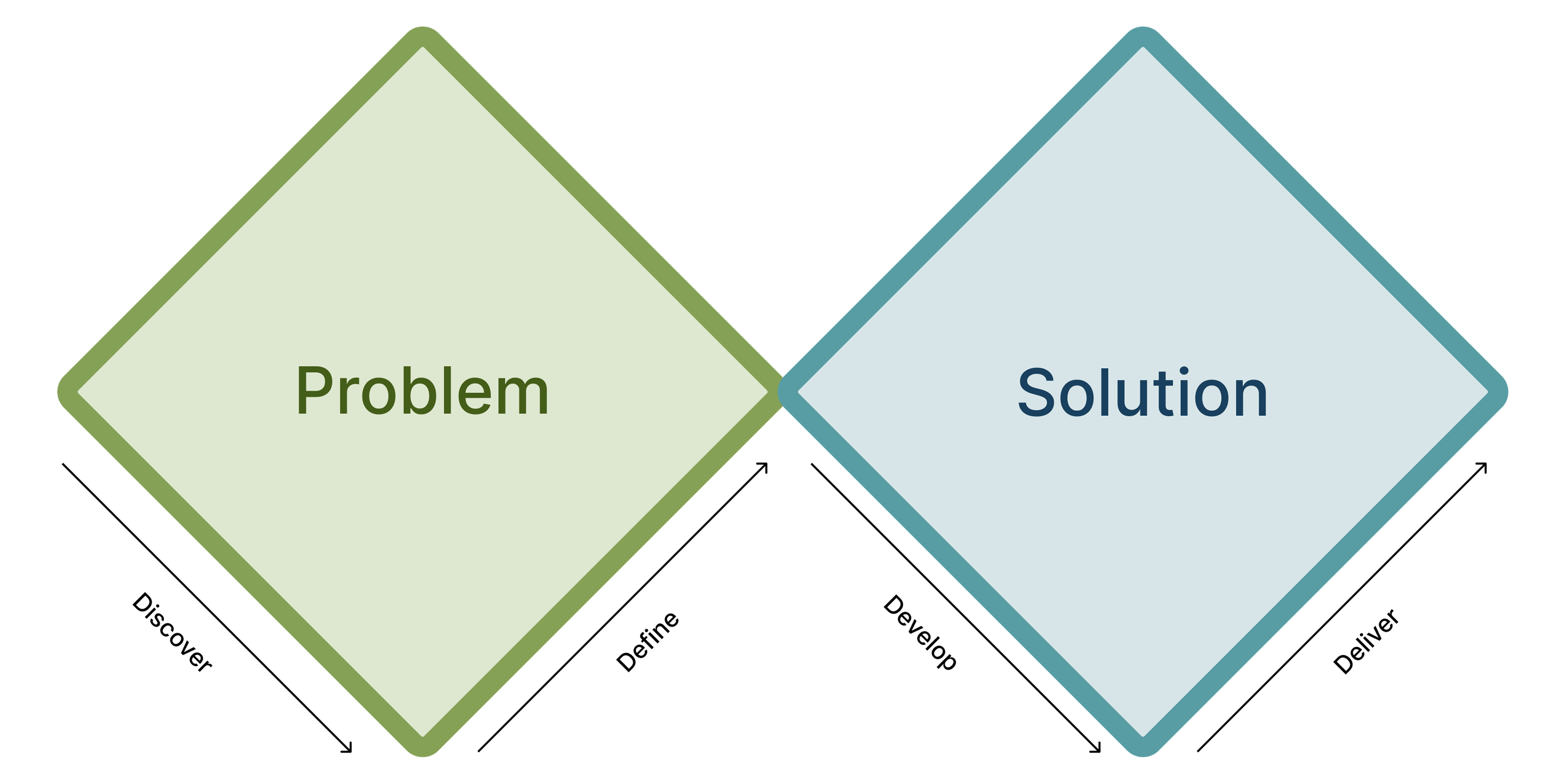
Process

The project was developed in the course design Human Machine Interaction for 4 monthes where we first learned going through a design process while designing a product.

Discover

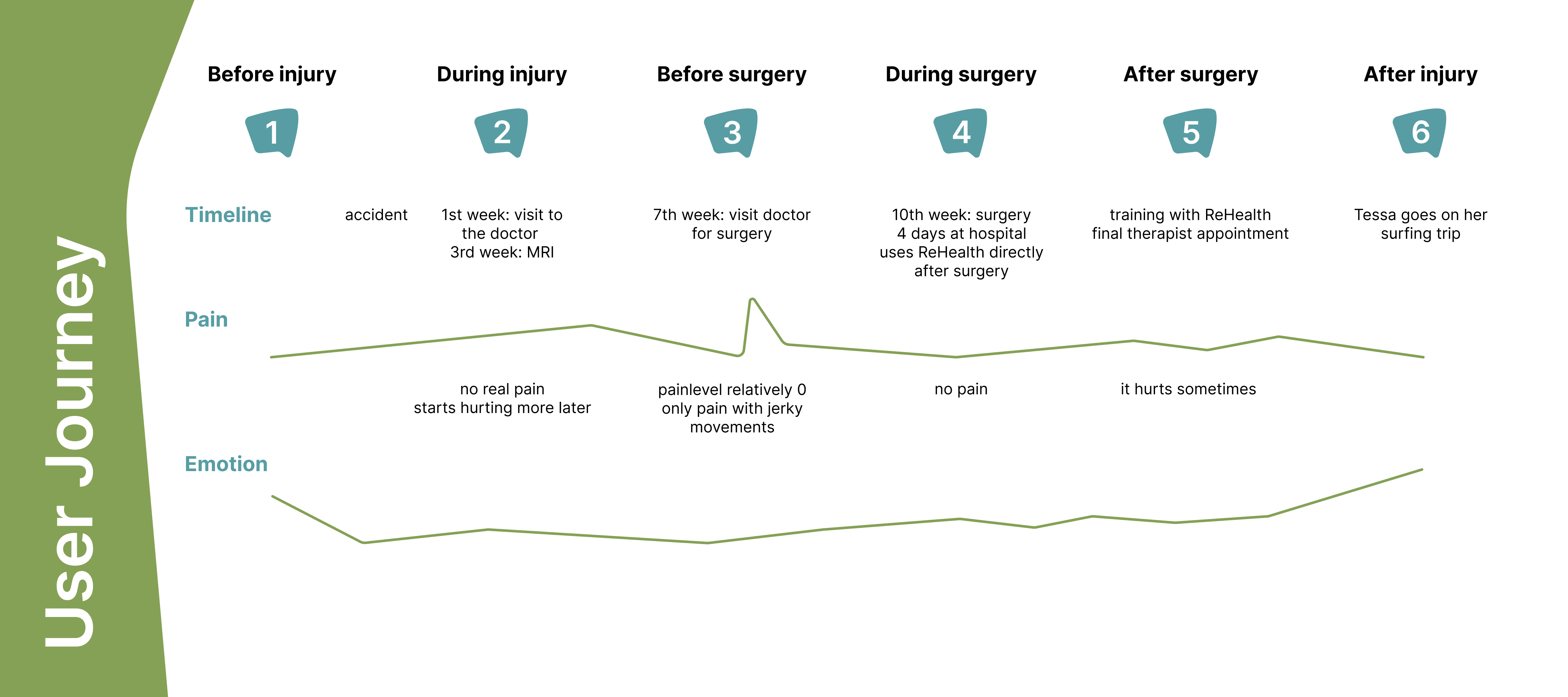
To bridge the gap between theory and experience, our team combined expert consultations with primary user research. Interviews with physiotherapists and recovering athletes highlighted a critical bottleneck: massive waiting lists and over-capacity providers often delay vital rehabilitation milestones.

We chose to focus our research on Anterior Cruciate Ligament (ACL) tears as our core use case, given the injury's high prevalence and notoriously complex recovery path.

Defining

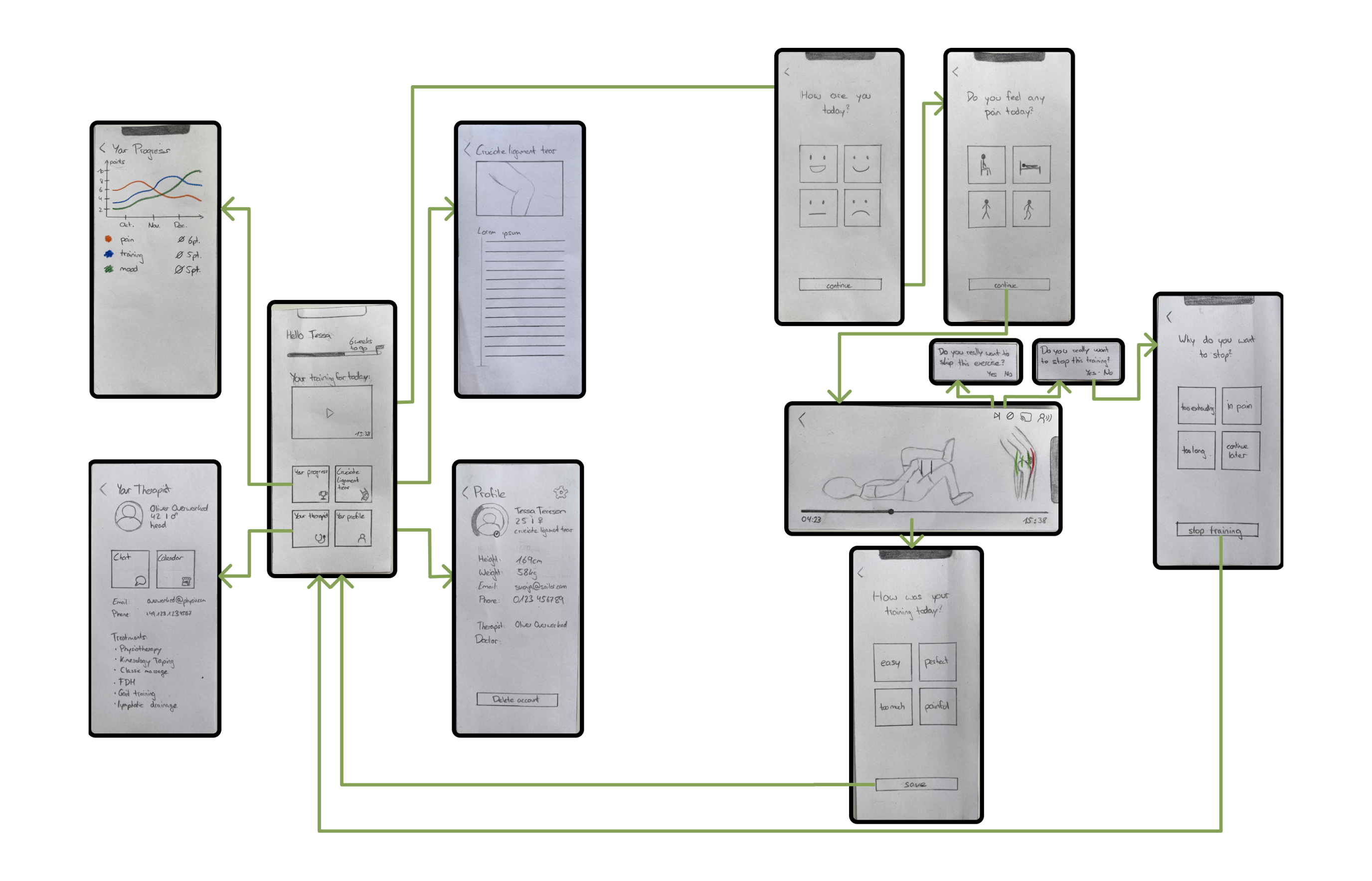
These findings were distilled into requirements for a dual-interface system. We defined the SmartBrace as the central wearable component that transfers real-time motion data directly to the application. We translated these requirements into a comprehensive information architecture and designed detailed user flows. This structure was essential to visualize how the data from the wearable flows through the athlete’s app and eventually populates the therapist's diagnostic tools, ensuring a seamless experience for both user groups.

Solution

We developed a system that the recovery process from an isolating task into a transparent, guided journey.
By integrating AI-driven analytics with a human-centered UI, we created a tool that gives athletes the confidence to perform exercises correctly while providing therapists with the objective evidence they need to adjust therapy plans remotely and efficiently.ReHealth provides a seamless feedback loop: athletes receive real-time guidance via the SmartBrace to ensure correct form, while therapists use a data-rich dashboard to monitor progress remotely. This ecosystem replaces guesswork with objective evidence, allowing for personalized therapy adjustments and higher patient motivation throughout the long recovery process.

Reflection

This project taught me how to balance data density with cognitive load. The challenge was making the therapist interface professional and information-rich without sacrificing clarity.Beyond the UI challenges, it was my first time navigating the entire design process of a functional, integrated system, from initial research to high-fidelity prototyping. Working in an interdisciplinary team, I saw how much can be achieved in a short timeframe when everyone contributes their specific expertise.
VIEW PROJECT