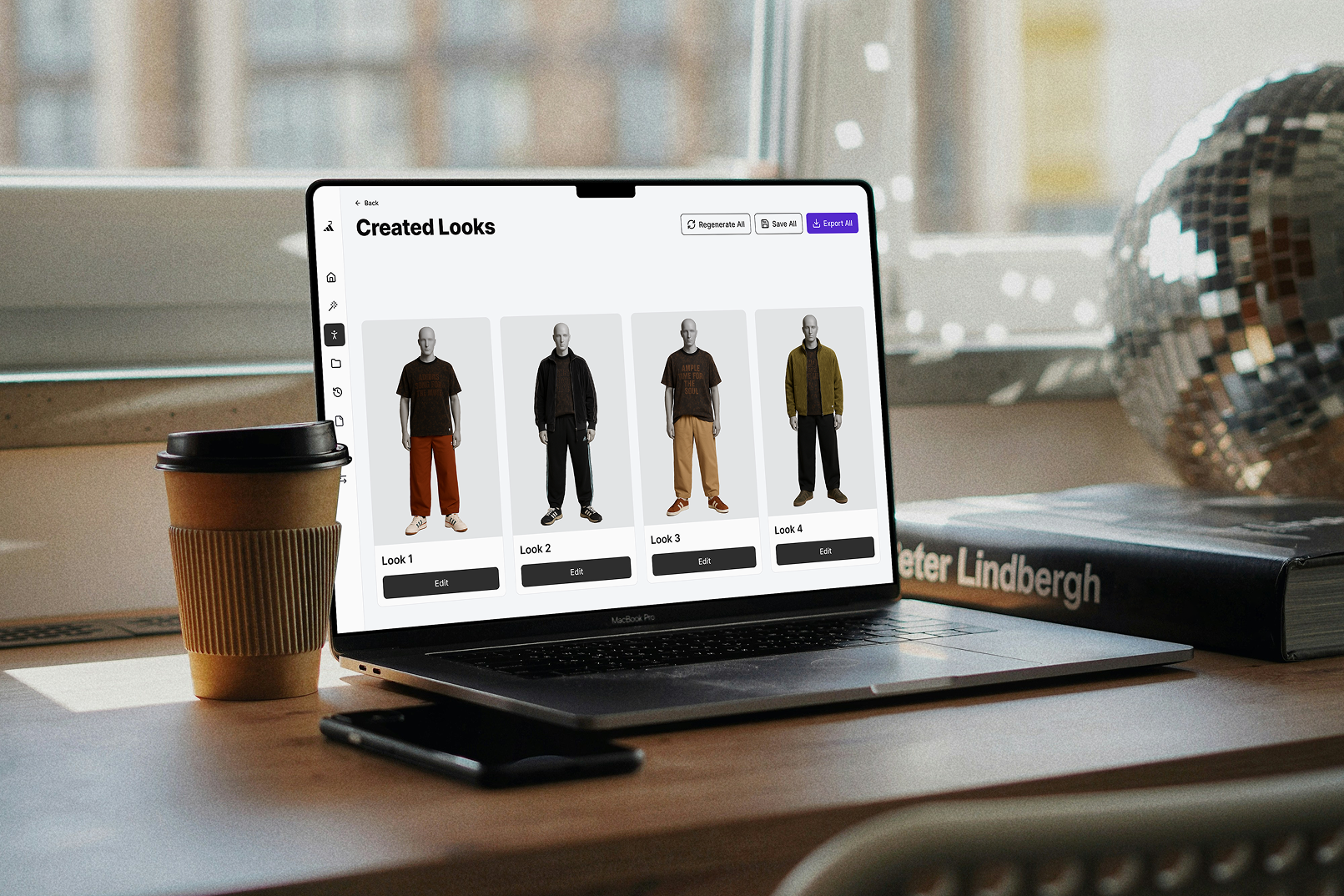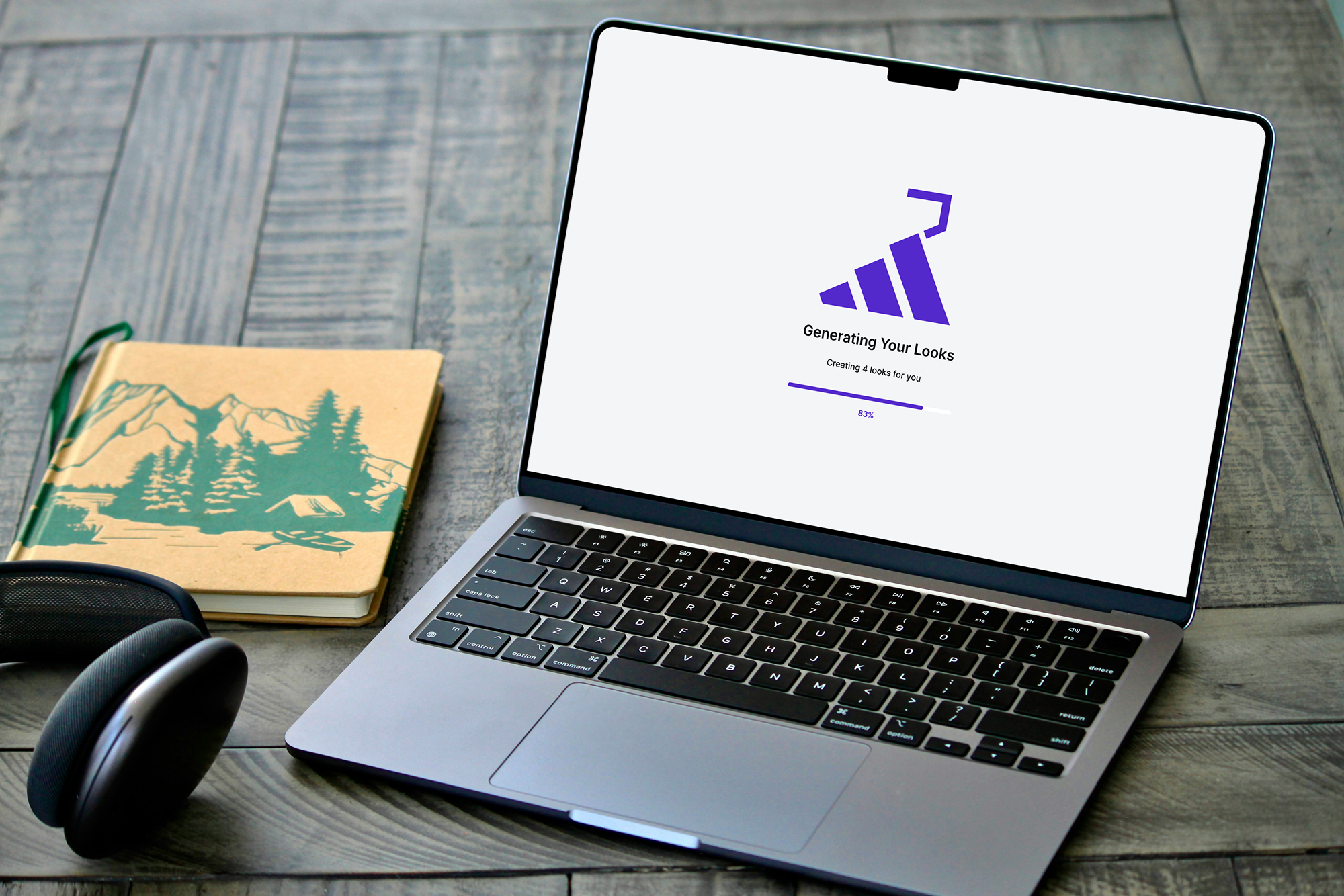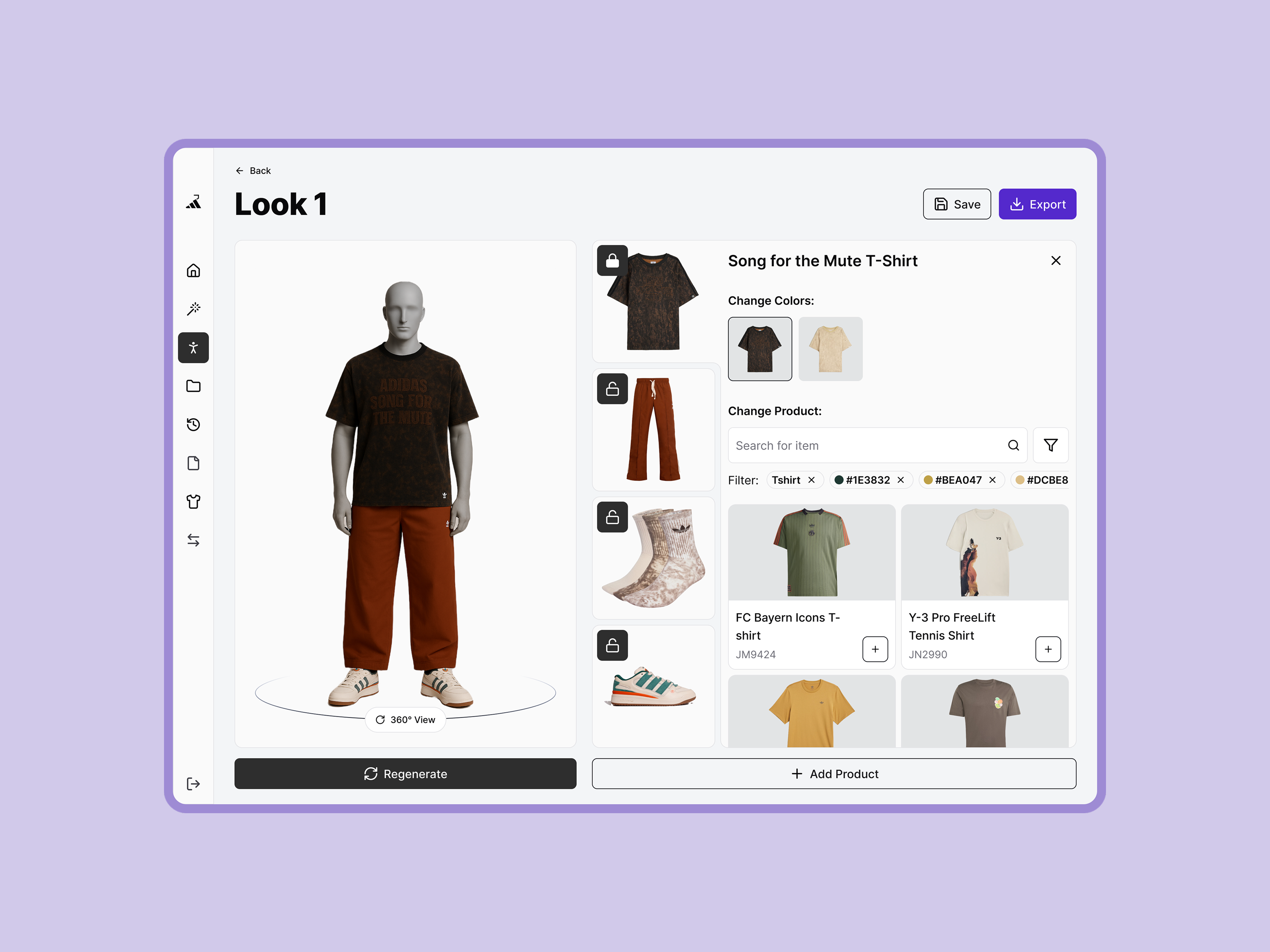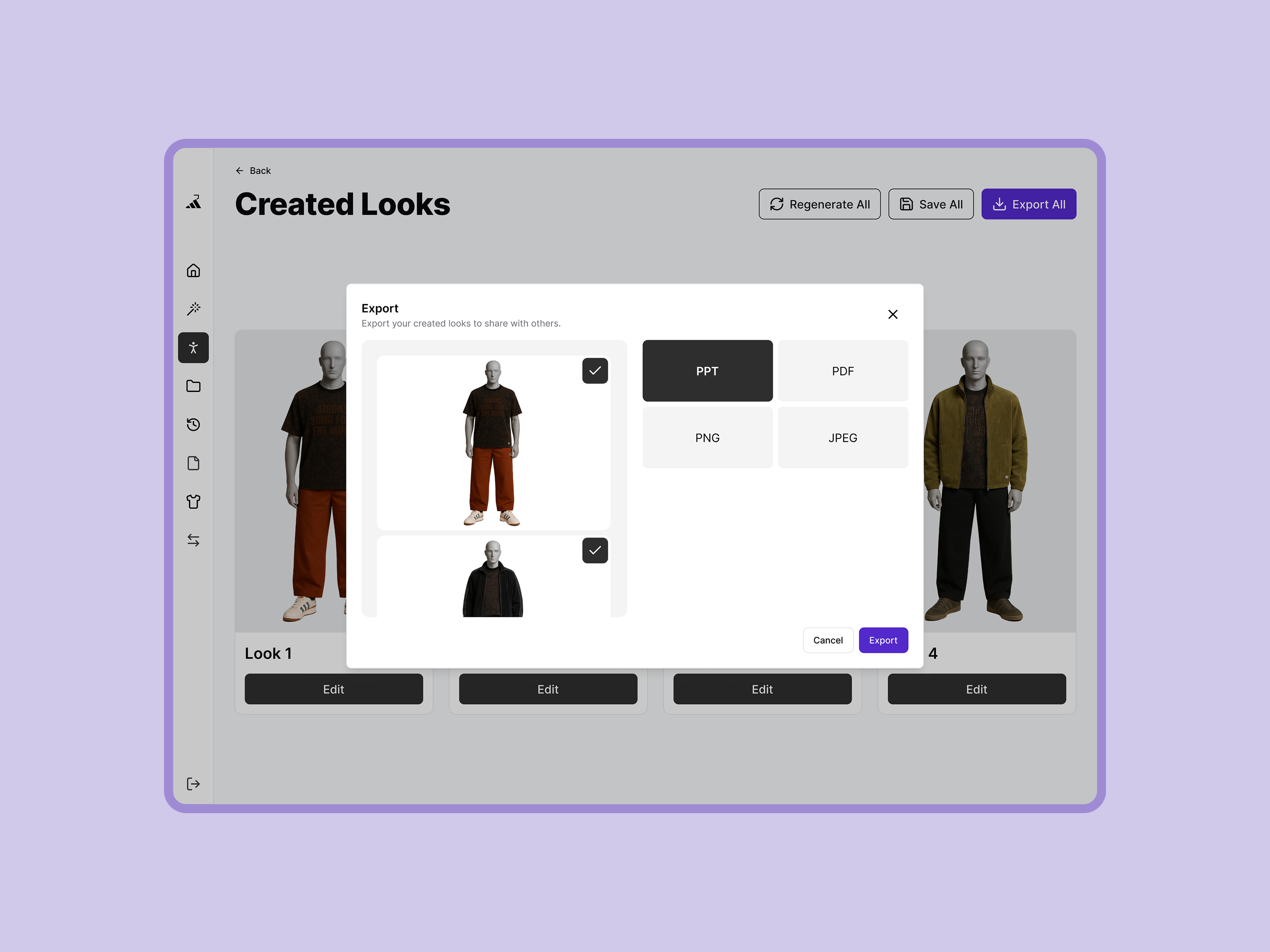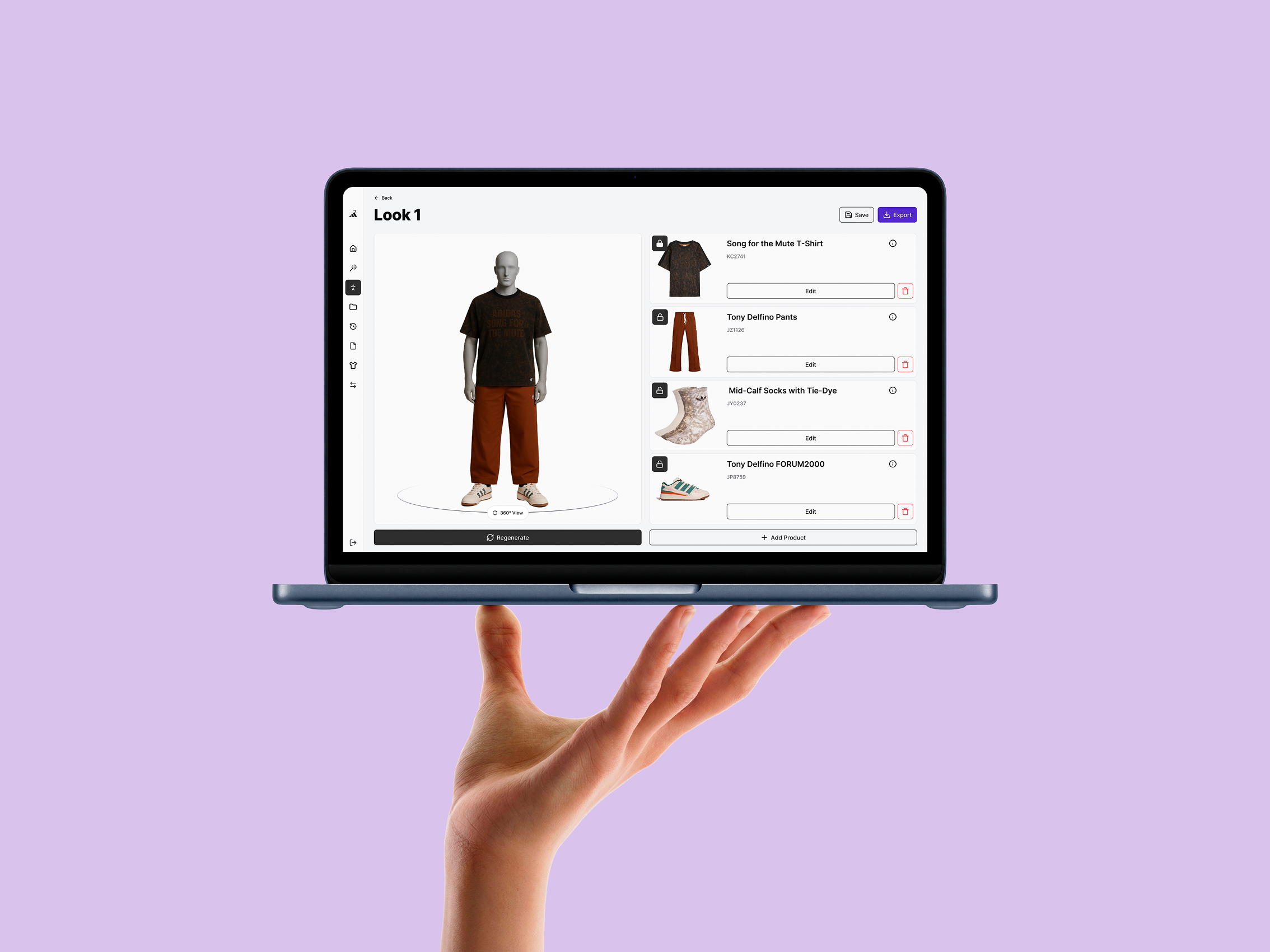
LookLab is a web based solution created to optimize the visual merchandising process for adidas, specifically for creating and managing "Shop the Look" concepts for in-store mannequin displays. It allows teams to virtually curate outfits and plan mannequin displays to ensure they always reflect the latest seasonal trends and available stock. By connecting creative styling with real-time data, LookLab makes the planning process more efficient, scalable, and professional.
LookLab
A web-based tool for adidas that streamlines and speeds up the creation and management of in-store mannequin displays through virtual outfit planning.
- Figma
- Adobe PhotoshopAdobe Illustrator
- University
- 6 Designer5 Developer
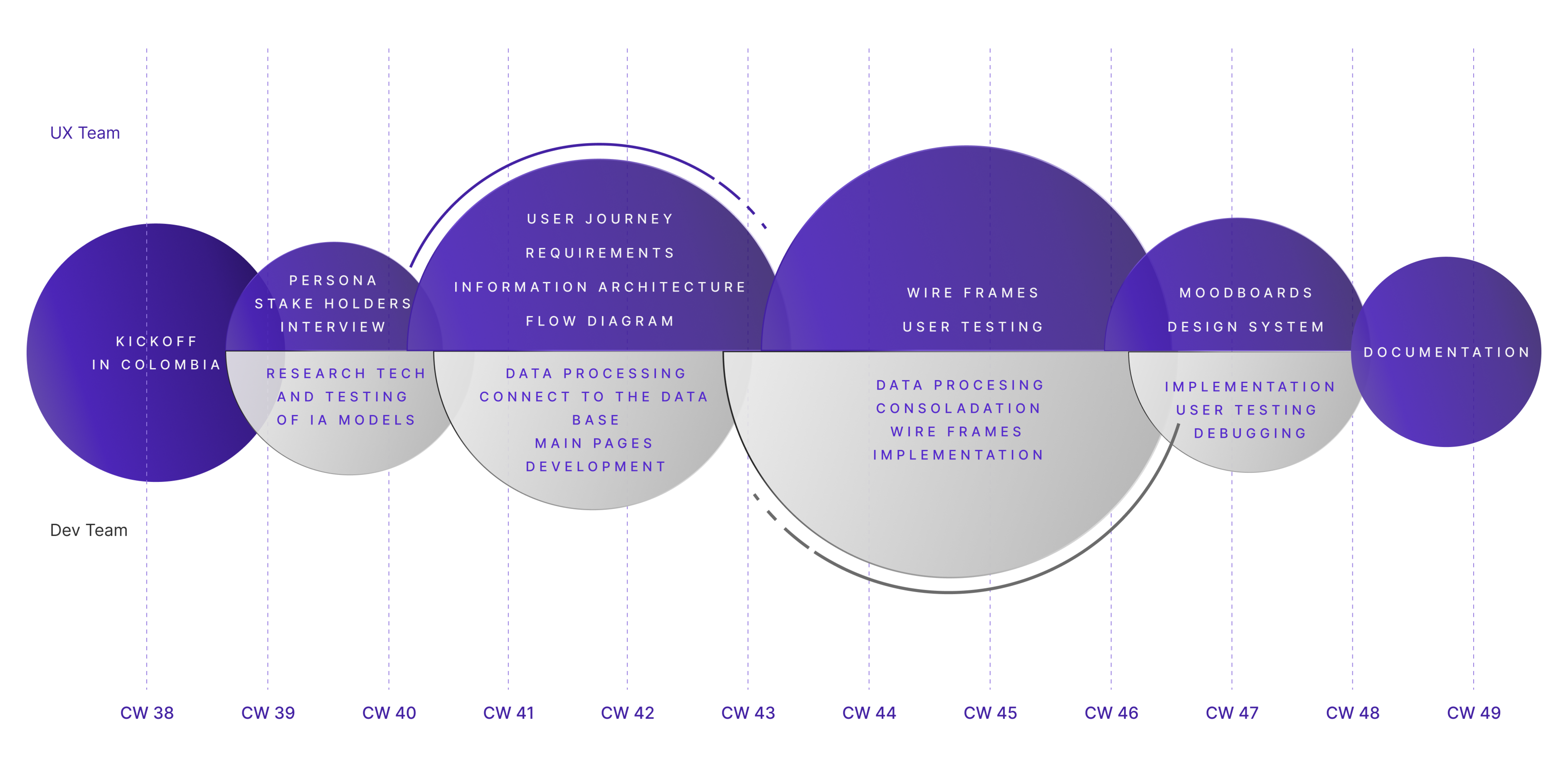
- Sep 2025 - Dec 2025(4 Months)

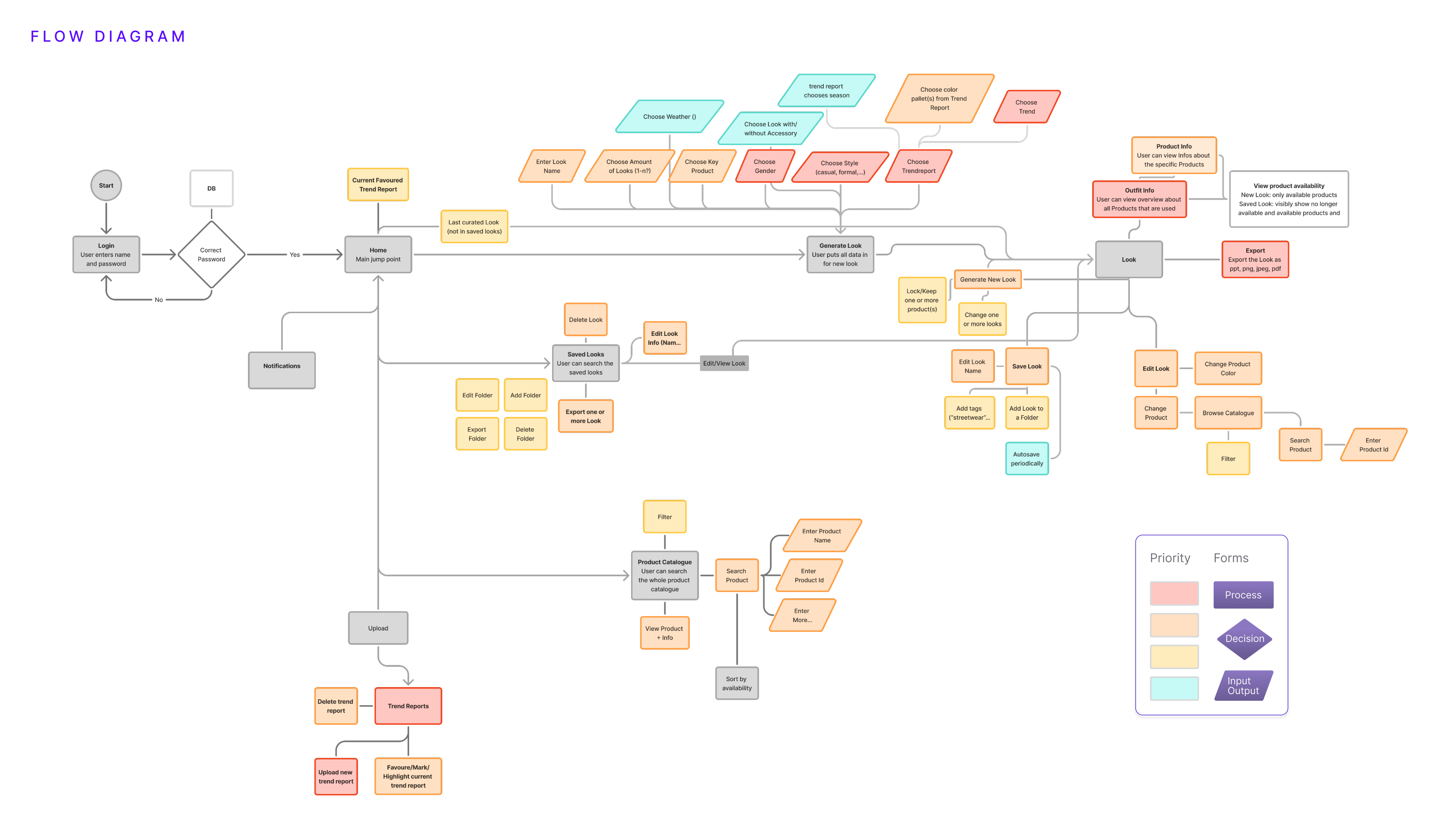
- UX Strategy: I worked on defining a logical structure and intuitive user flows to ensure a seamless navigation experience and maximum clarity.
- Team Coordination: I managed task distribution and team synergy within the design team.
- User Research: I assisted in crafting interview guides and preparing usability tests to gather actionable insights.
- Design Execution: I bridged the gap between low-fi wireframes and high-fidelity UI, taking responsibility for the full UX/UI lifecycle and visual design.
Process

Research & Analyse
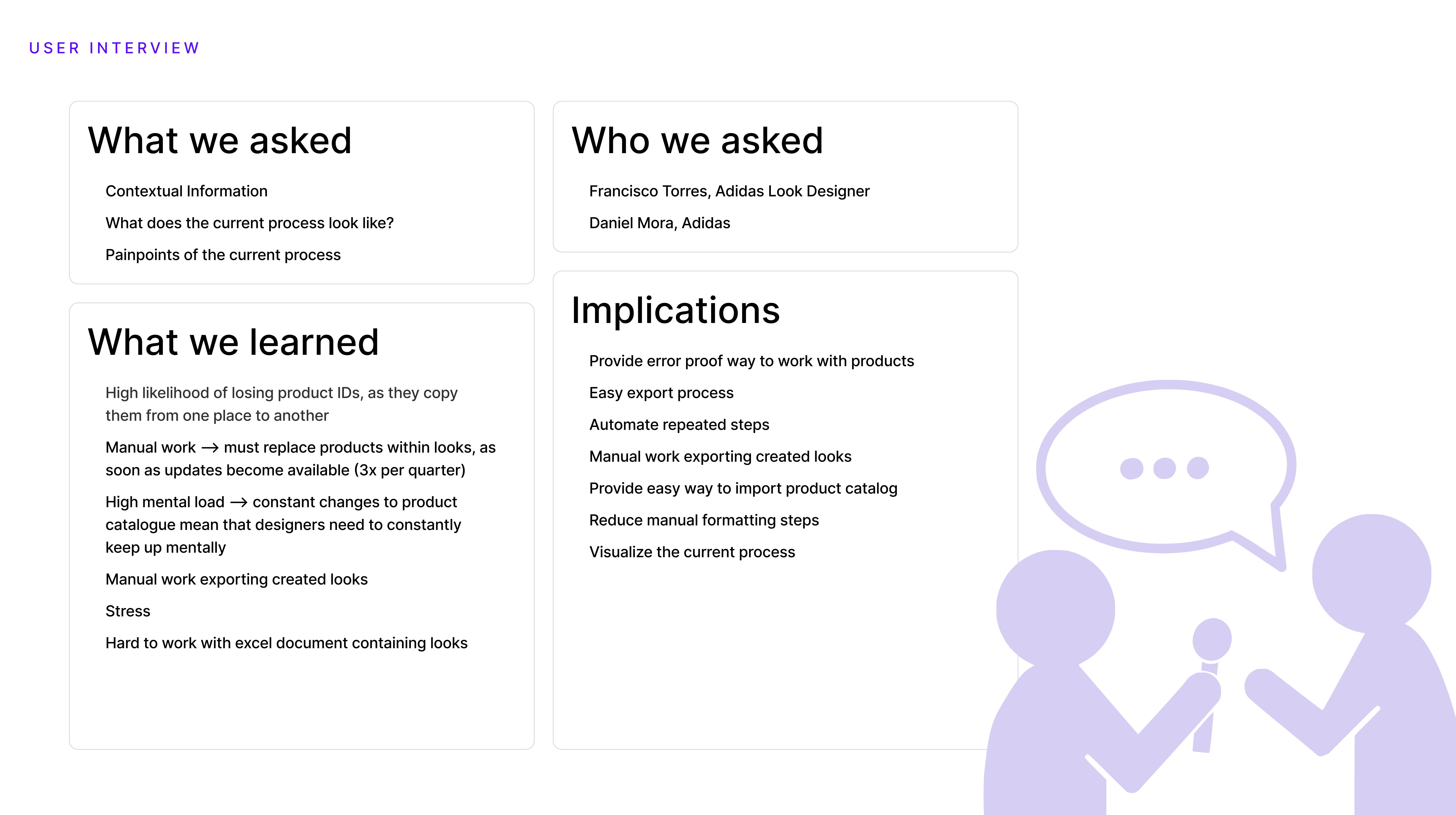
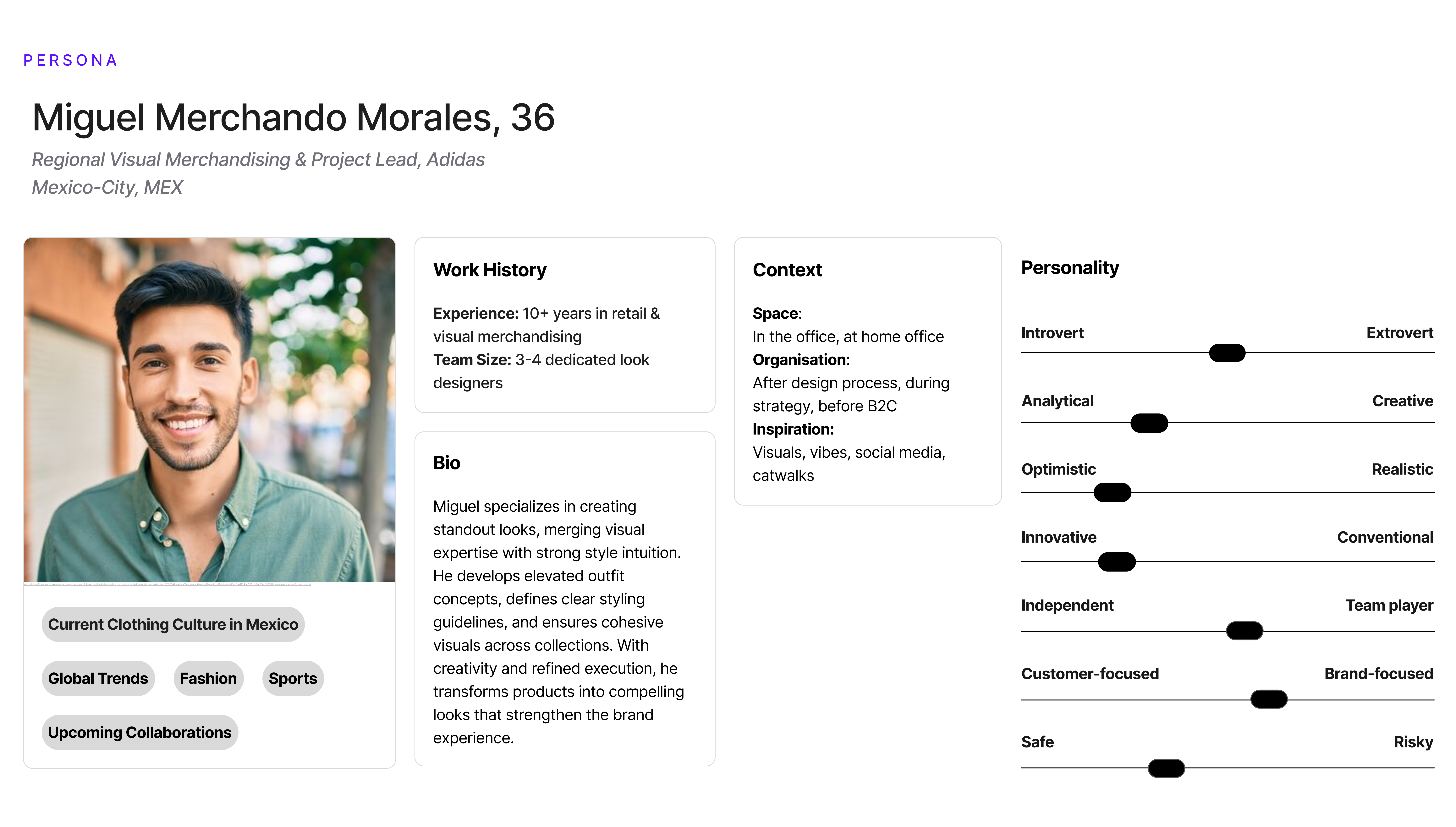
After identifying the stakeholders, we conducted in-depth interviews with the Visual Merchandising team, the primary end-users of the tool. Our goal was to immerse ourselves in their daily workflows and environmental context, allowing us to pinpoint critical pain points, setting a clear foundation for process-driven UX improvements.
Defining
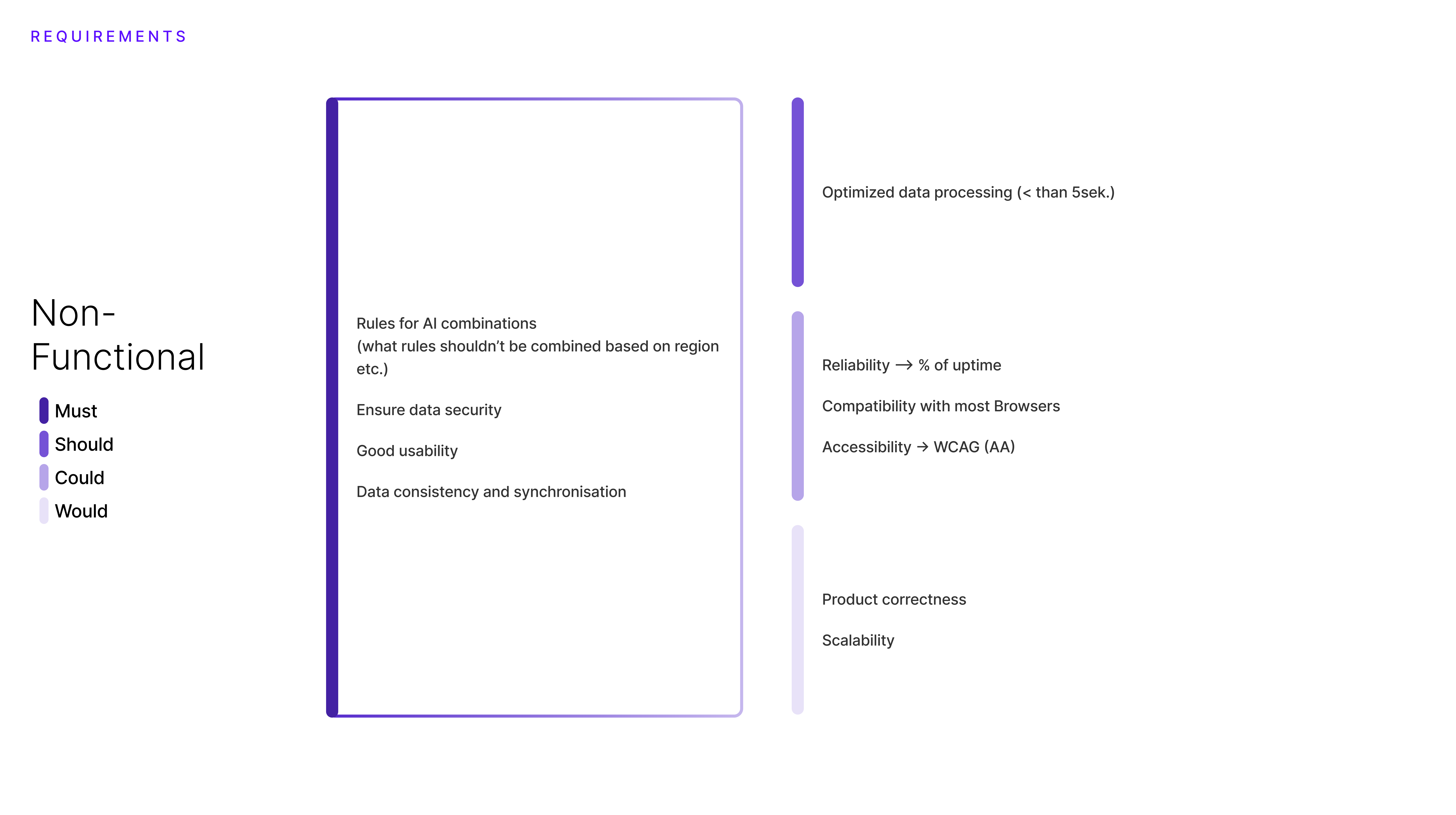
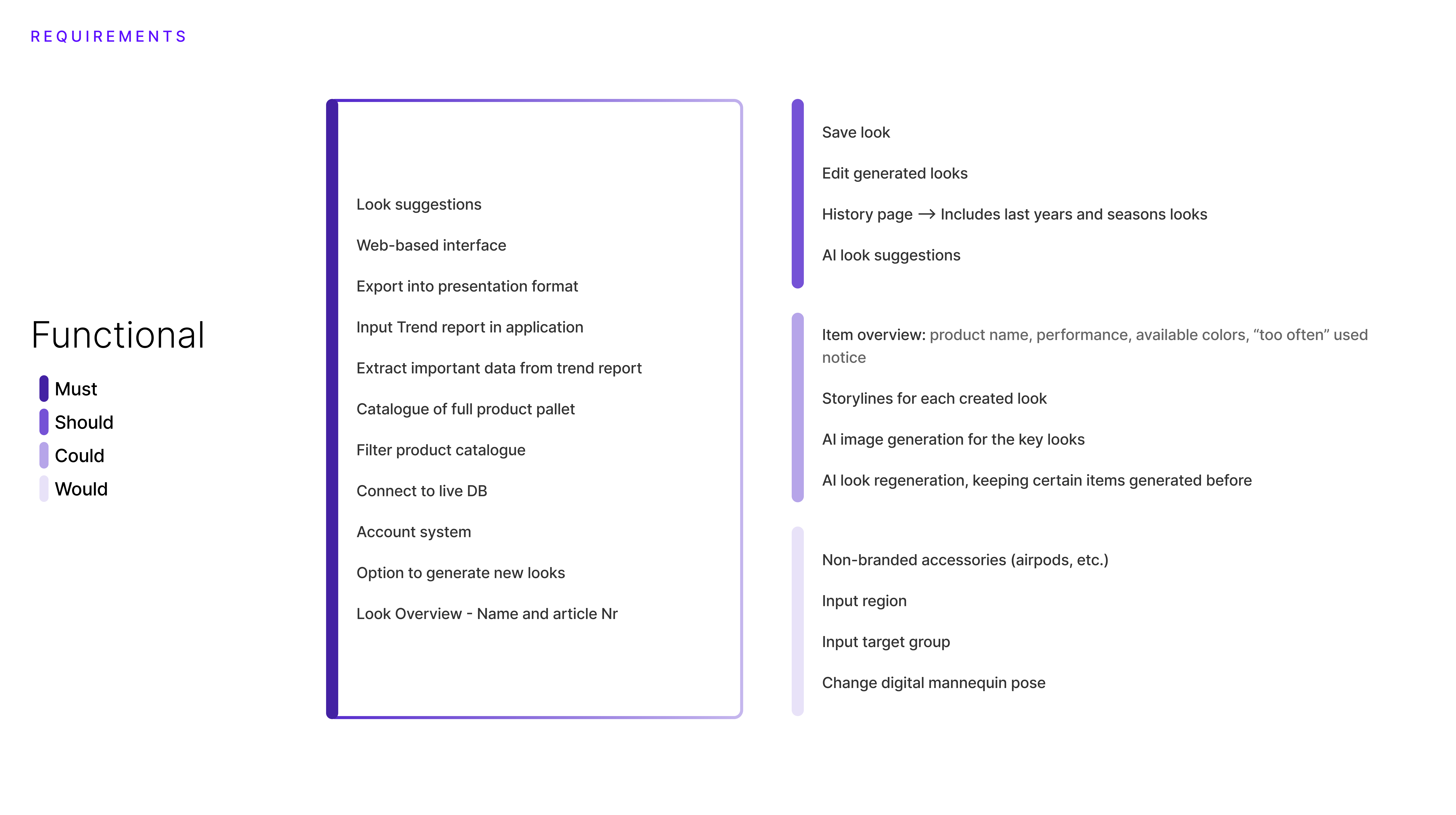
Next, we conducted a detailed requirements analysis, translating user insights into actionable features. By applying the MoSCoW method, we prioritized these requirements to establish a clear roadmap, ensuring that both design and development focused on the high-impact 'Must-haves' that were critical for the MVP.
Ideation & Iteration
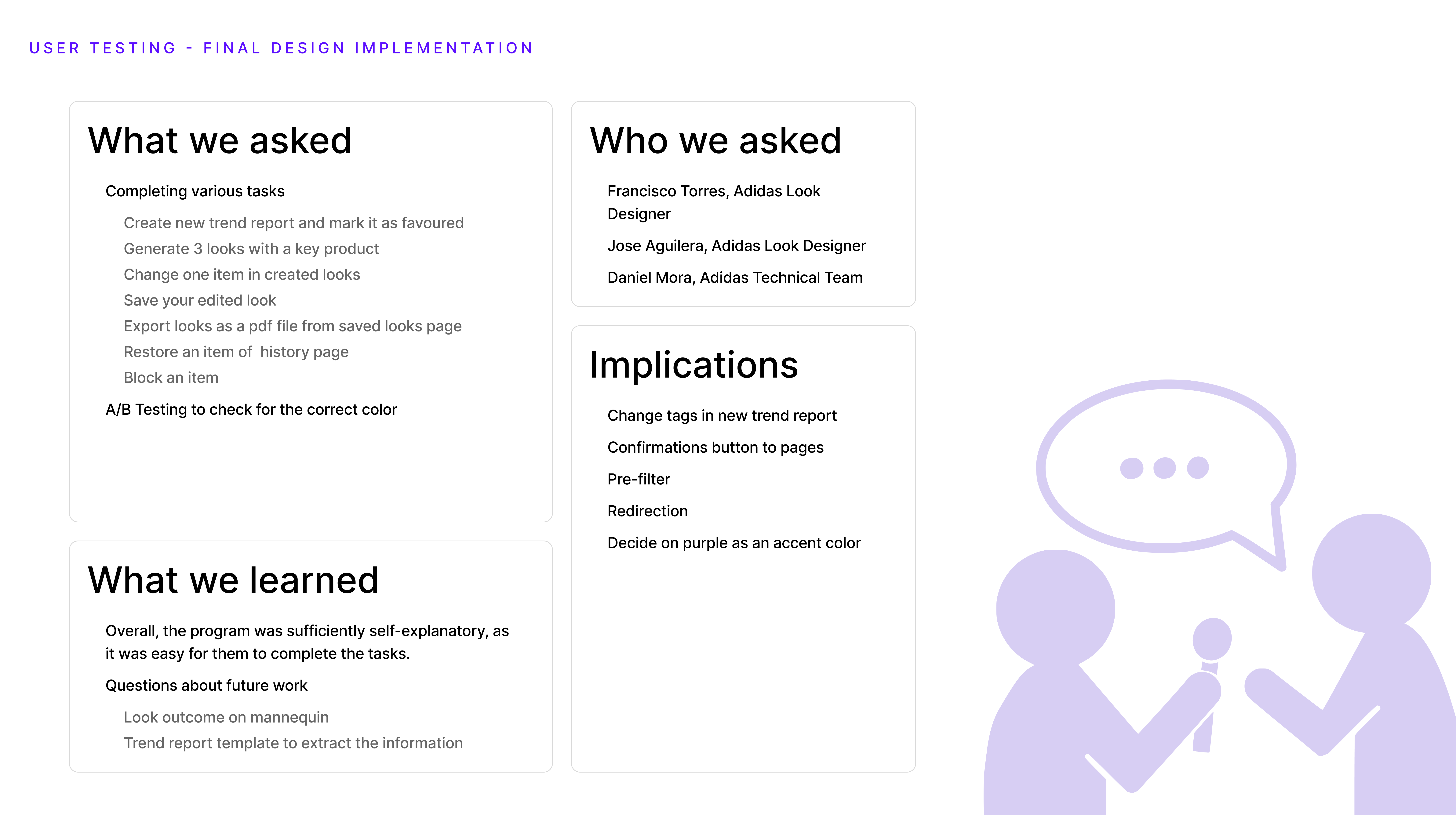
We developed wireframes and validated them through usability testing to ensure our proposed logic was intuitive. These insights allowed the development team to begin building layouts and verify which planned features were technically feasible. By identifying where the design aligned with the backend and where adjustments were needed due to technical constraints, this collaborative loop enabled us to make precise refinements before moving into high-fidelity design.
Solution
Reflection
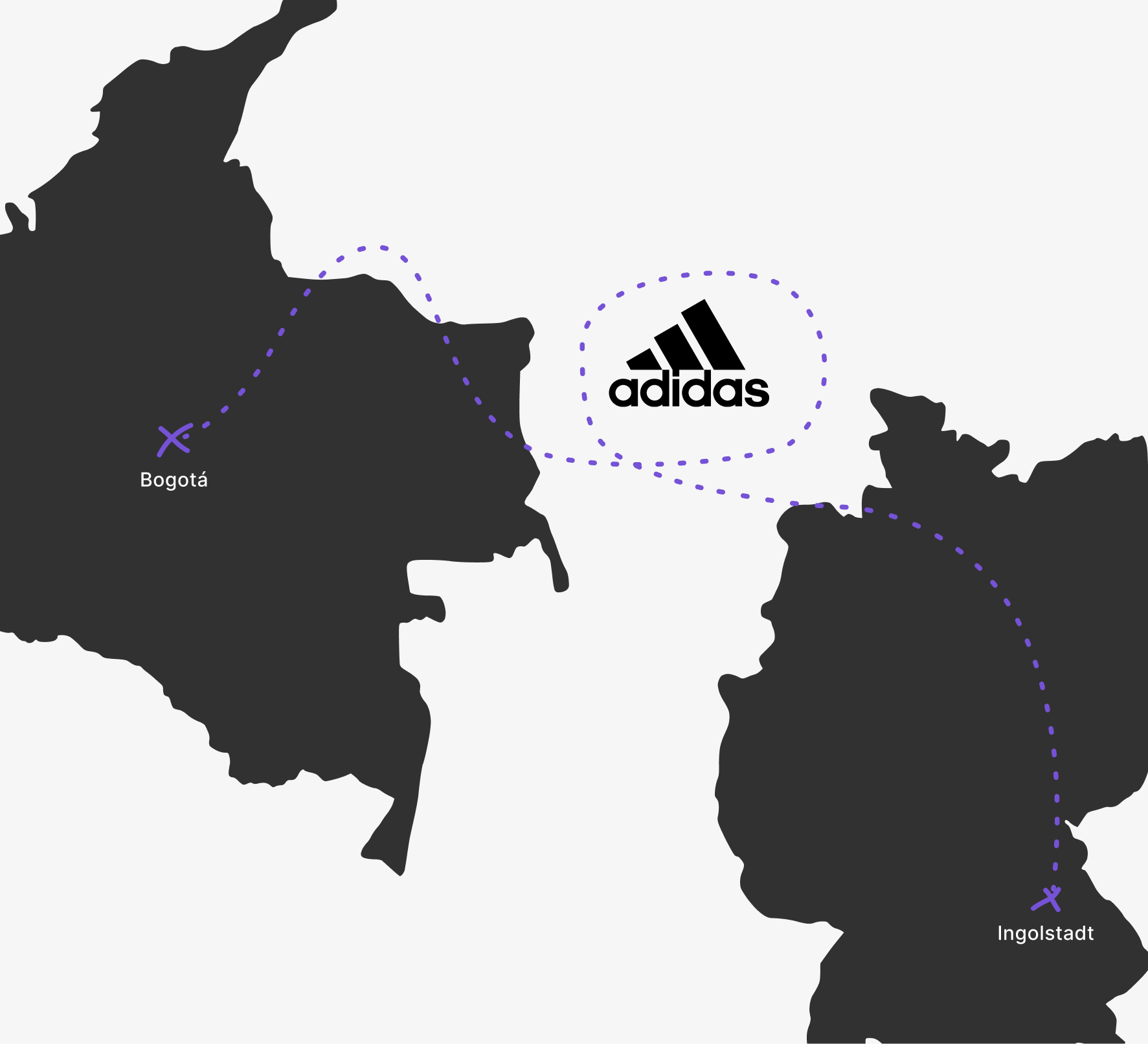
The best part was the intercultural exchange that happened naturally along the way. We did more than just design because we shared our cultures and built real friendships. Every decision needed a solid reason which made stakeholder talks smoother and kept things buildable for developers. In the end I realized that the best products come from genuine human connection and a team that stays truthful no matter what.